
Webinars
Explore expert insights through our interactive webinar sessions.

No upcoming webinars found.

The Person on the Meeting ... Wasn't Real !
Artificial Intelligence is transforming the way organizations work—but it is also changing the cybersecurity landscape. In this webinar, our experts explore how AI is reshaping cyber threats, the opportunities it creates for organizations, and the practical steps every business should take to adopt AI securely. The session also provides an overview of the Saudi National Cybersecurity Authority (NCA) Draft AI Cybersecurity Guidelines (AICG-1:2026) and discusses key governance practices for reducing AI-related risks. In this webinar you'll learn: AI's role in modern cybersecurity AI-powered cyber threats and social engineering Deepfake attacks and real-world cyber incidents Risks of sharing sensitive information with AI tools AI governance and secure AI adoption Best practices for organizations Key highlights of the NCA Draft AI Cybersecurity Guidelines (AICG-1:2026) Whether you're a business leader, IT professional, cybersecurity specialist, or simply interested in AI security, this webinar provides practical insights to help you use AI responsibly and securely.Register now to watch the full webinar !
 Ahmed Alamer

Fake Domains, Real Damage
This webinar shows how fraudsters exploit people's trust in well-known brands by building lookalike domains and websites that are hard to tell apart from the real thing, then walks through the full attack lifecycle step by step, backed by official figures and real fraud cases that reveal the true financial damage this kind of cybercrime causes. In this webinar, you'll learn: Why attackers specifically target trusted brands to carry out their scams The technical tricks behind building near-identical lookalike domains (character swaps, visual similarity, misleading extensions) The eight stages of a typical attack, from information gathering to exploiting compromised accounts The psychological triggers fear, authority, reward hat push victims into rushed decisions Real scenarios showing what happens to customers and employees once they fall for these attacks Details of an actual fraud case that exceeded $120 million in losses, alongside recent global statistics The practical difference between brand impersonation, phishing, and intellectual property infringement A cyber threat intelligence-based response method: confirm the threat, preserve the evidence, then mitigate the impact Simple, practical steps to protect yourself and your organization from falling victim Whether you're in a leadership role, responsible for cybersecurity, or simply work with digital systems on behalf of your organization, this webinar is worth watching, it gives you real tools to spot impersonation attempts before they turn into a financial loss or a trust crisis with your customers. Register now to watch the full webinar!
 Mohammed Aladghm
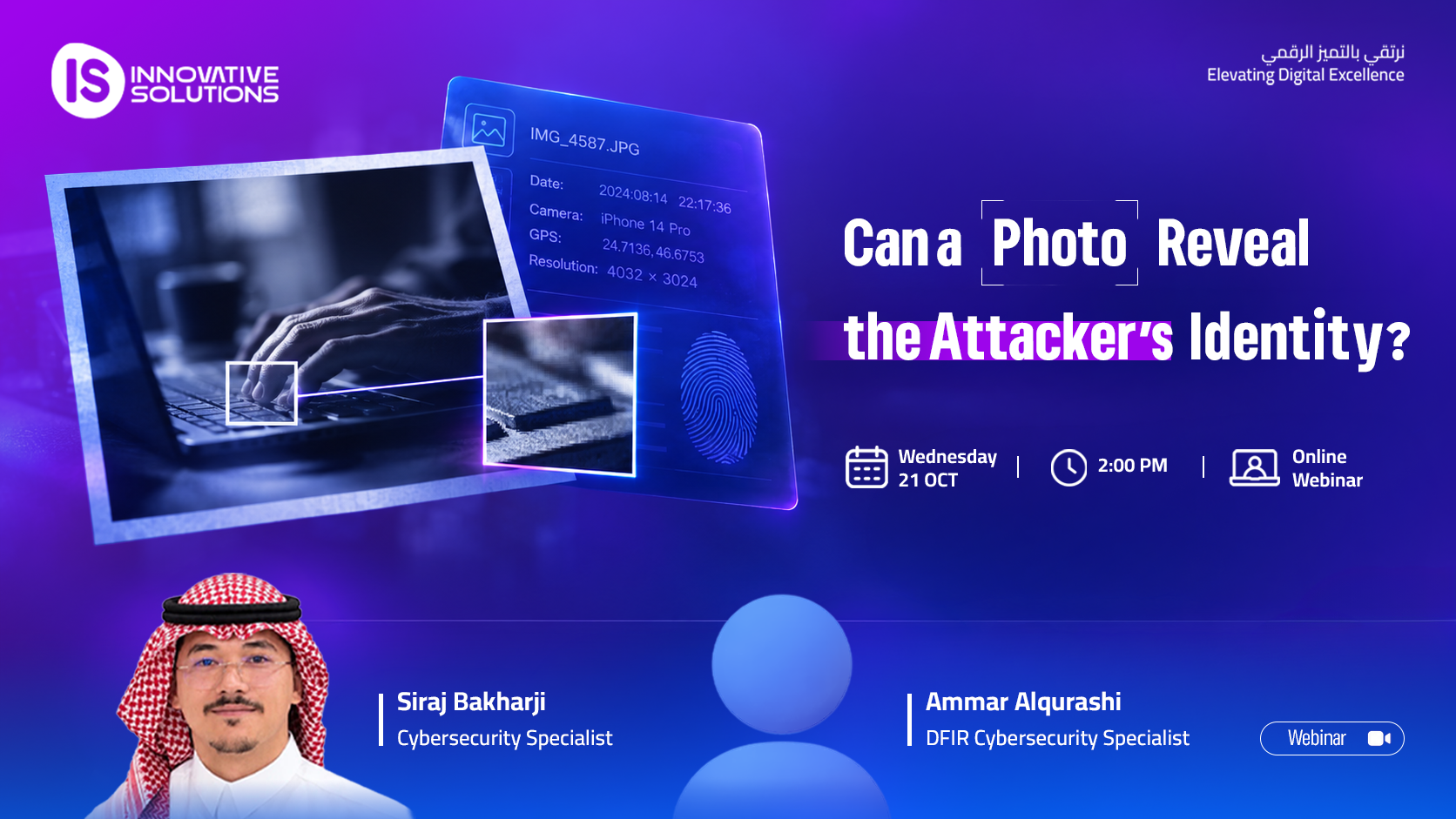
Can a Photo Reveal the Attacker’s Identity?
This webinar explores what a single photo can and cannot reveal in a security incident. Using a hypothetical case that begins with an image received from an unknown account, followed by a threatening message, it walks through how digital forensics is used to collect evidence, examine it, and link it to the incident, while making the distinction between finding a lead and proving an attacker's identity. In this webinar, you'll learn: What digital forensics is and its five stages: collection, preservation, examination, analysis, and reporting Why the goal is not just finding information, but reaching conclusions that can be verified and defended with evidence The everyday situations that call for digital forensics, from fraud and extortion to data leaks, suspicious emails, unauthorized activity, and file origin checks How to preserve evidence before analysis: keeping the original untouched, documenting the context, working on a copy, calculating a SHA-256 hash, and recording every step What EXIF metadata can reveal about the device, capture time, location, and editing software, and the limits of relying on it A hands-on demonstration of extracting and reviewing a photo's metadata with ExifTool How investigators connect image data with the message, the account, the organization's records, and independent sources Why a single field inside a photo is not enough to identify an attacker, and how relying on it can lead to accusing the wrong person Why a photo with no EXIF data does not end the investigation Whether you work in cybersecurity, handle incident response, or simply want to understand how digital evidence is evaluated, this webinar gives you a clear, practical view of how investigators turn a digital clue into a conclusion backed by evidence. Register now to watch the full webinar!
 Seraj Ghuni & Ammar Alqurashi
Subscribe now
Stay up to Date
By submitting this form, you agree that we may use your details to respond to your request in line with our Privacy Policy and secure usage guidelines. Privacy Policy
By submitting this form, you agree that we may use your details to respond to your request in line with our Privacy Policy and secure usage guidelines. Privacy Policy